
Defense Software Companies
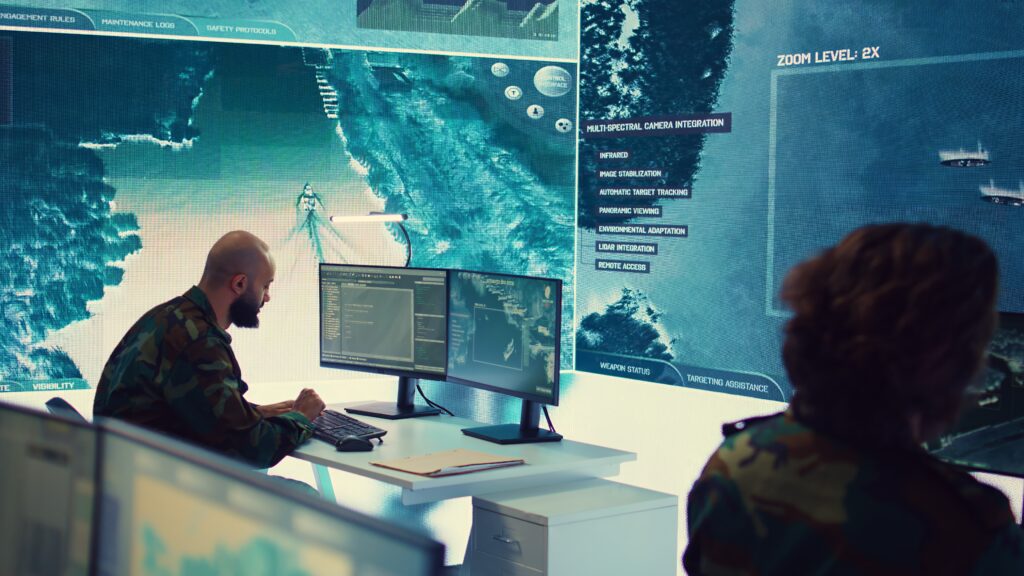
Defense software companies are critical to the modern defense industry, providing the technological backbone for military operations, intelligence analysis, cyber defense, and mission-critical communications. These companies specialize in developing secure, reliable, and high-performance software systems that integrate seamlessly with advanced hardware platforms such as aircraft, naval vessels, armored vehicles, and unmanned systems. Their work spans a wide range of applications, from command and control platforms to artificial intelligence systems for autonomous operations. The importance of these companies is amplified in an era where information dominance, network security, and rapid decision-making define military superiority. Definition and Scope of Defense Software Companies Defense software companies focus on the design, development, and deployment of specialized software solutions tailored to the defense and national security sectors. Unlike commercial software firms, their products must comply with rigorous security protocols, real-time performance requirements, and interoperability standards. They serve military branches, defense ministries, intelligence agencies, and prime defense contractors, often under highly classified programs. Core Functions and Capabilities C4ISR Platforms: Command, Control, Communications, Computers, Intelligence, Surveillance, and Reconnaissance systems that provide situational awareness and decision support. Cybersecurity Solutions: Network defense, intrusion detection systems, threat analysis platforms, and incident response tools tailored for defense environments. Electronic Warfare Software: Signal intelligence, jamming control, radar countermeasure algorithms, and electronic protection measures. Simulation and Training: High-fidelity virtual environments for pilot, crew, and soldier training, including weapon simulation and tactical scenarios. Autonomous Systems Software: AI-driven navigation, mission planning, and control systems for UAVs, UGVs, and unmanned maritime platforms. Logistics and Asset Management: Defense logistics software to manage supply chains, maintenance schedules, and spare parts inventory. Leading Global Defense Software Companies Several multinational corporations dominate the defense software landscape, each bringing decades of expertise and vast R&D capabilities. Lockheed Martin Lockheed Martin develops mission-critical software for fighter jets, naval ships, and missile systems. Its software portfolio includes advanced flight control systems, integrated battle management tools, and AI-based target recognition systems. Northrop Grumman Specializing in autonomous systems, C4ISR platforms, and cybersecurity, Northrop Grumman’s software solutions power systems such as the Global Hawk UAV and advanced radar command platforms. BAE Systems BAE Systems provides software for electronic warfare, secure communications, and mission planning. Their tools are widely used in NATO operations and allied forces. Raytheon Technologies Raytheon develops missile defense control software, integrated radar systems, and battle management platforms. Their solutions are renowned for interoperability in joint-force environments. Thales Group Thales offers secure communication platforms, cyber defense solutions, and integrated naval combat management software. Palantir Technologies Palantir provides big data integration and analytics platforms, notably Gotham and Foundry, used extensively in intelligence operations and military logistics. Leading Defense Software Companies in Turkey HAVELSAN HAVELSAN develops C4ISR platforms, simulation systems, and cybersecurity solutions. It serves as a critical technology provider for the Turkish Armed Forces, integrating indigenous software into major defense programs. ASELSAN While primarily known for electronics, ASELSAN also develops mission software for battlefield management, communications, and radar systems. Meteksan Savunma Meteksan specializes in radar, sonar, and communication software, often integrated with complex sensor systems for naval and land platforms. TUSAŞ (Turkish Aerospace Industries) TUSAŞ develops avionics and flight control software for indigenous aircraft and UAV platforms, including the ANKA drone family. Technologies and Software Types Embedded Software: Runs on mission hardware like avionics systems, missile guidance units, and combat vehicles. Middleware Platforms: Facilitate communication between hardware and application software. Simulation Engines: Provide realistic training and testing environments. Data Fusion Algorithms: Merge information from multiple sensors for enhanced situational awareness. Cyber Defense Suites: Protect against espionage, sabotage, and cyber attacks targeting defense networks. Security Standards and Compliance Defense software must adhere to stringent international and national standards: DO-178C: Safety-critical software for airborne systems. MIL-STD-498: Military software development and documentation process. ISO/IEC 27001: Information security management systems. NATO STANAG: Interoperability standards for allied defense systems. Integration Challenges Integrating defense software into existing platforms presents several challenges: Compatibility with legacy systems still in service. Interoperability between different branches of the armed forces. Cybersecurity risks during integration and deployment phases. Meeting rigorous testing and certification requirements. Solutions include modular software architectures, middleware for protocol translation, and phased deployment strategies. Future Trends Artificial Intelligence: AI-driven decision support systems, automated threat detection, and autonomous mission execution. Edge Computing: Real-time processing on the battlefield without relying on distant servers. Quantum-Resistant Encryption: Next-generation cryptography to secure communications against quantum computing threats. Digital Twin Technology: Simulated replicas of defense systems for maintenance prediction and mission rehearsal. Multi-Domain Operations Software: Platforms that integrate air, land, sea, cyber, and space operations into a unified control environment. Strategic Importance In modern warfare, superiority is often determined by the speed and accuracy of information processing and dissemination. Defense software companies provide the tools to collect, process, and act on data faster than adversaries. As geopolitical tensions and technological competition increase, the role of these companies will only grow more critical. Defense software companies form the digital backbone of national security, delivering the systems and platforms that empower armed forces to operate efficiently, securely, and effectively. Through a combination of cutting-edge technology, stringent security standards, and continuous innovation, they ensure that defense operations remain ahead of emerging threats. Whether developing advanced AI systems for autonomous drones or secure networks for global military communications, these companies are at the forefront of defense technology evolution.
Industrial Robotics Software
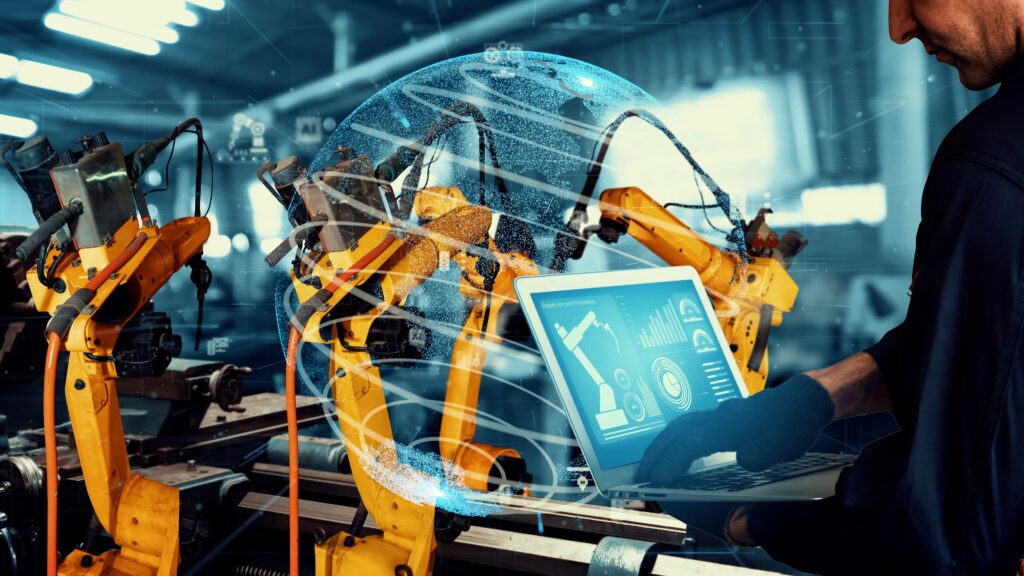
Industrial robotics software is the digital intelligence that powers robots in manufacturing, logistics, and other industrial environments. It provides the algorithms, interfaces, and communication protocols that enable robots to perform complex tasks with high precision, speed, and repeatability. Without advanced software, even the most sophisticated robotic arms and mobile robots would be limited to basic, inflexible movements. This software enables robots to adapt to different products, integrate with other equipment, and optimize their performance through data analysis and feedback control. Definition and Role in Modern Industry Industrial robotics software includes operating systems, programming environments, middleware, and application-level software that control and coordinate robotic systems. It transforms raw mechanical capabilities into intelligent, autonomous or semi-autonomous systems that can respond to their environment, work collaboratively with humans, and integrate into larger automation ecosystems. In the context of Industry 4.0, robotics software is increasingly connected to cloud services, AI algorithms, and IIoT platforms, enabling real-time monitoring, predictive maintenance, and continuous optimization. Core Components of Industrial Robotics Software Robot Controllers: Embedded computing units running real-time operating systems that execute motion control algorithms and safety checks. Motion Planning Modules: Software routines that calculate optimized paths for robot arms or mobile platforms, minimizing travel time while avoiding collisions. Sensor Integration Layer: Interfaces for cameras, LiDAR, force-torque sensors, proximity detectors, and other sensory inputs. Programming Interfaces: Graphical and code-based environments allowing engineers to define robot behavior, including teach pendants, drag-and-drop editors, and APIs. Safety Management Software: Implements protective measures like virtual safety zones, speed limits in collaborative modes, and emergency stop functions. Connectivity Modules: Enable communication with PLCs, MES, ERP, and other industrial systems using protocols such as OPC UA, EtherNet/IP, and Modbus. Functional Capabilities Modern industrial robotics software provides a wide range of capabilities beyond basic motion control: Adaptive Control: Adjusts movements in real time based on sensor feedback, compensating for variations in part positioning or environmental conditions. Multi-Robot Coordination: Synchronizes operations between multiple robots or robotic cells to avoid interference and maximize throughput. Task Scheduling: Integrates with production schedules to dynamically assign tasks based on availability and priority. Quality Inspection: Uses integrated vision systems to detect defects, verify assembly, or measure dimensions during operation. Predictive Maintenance: Monitors motor currents, joint torques, and cycle counts to predict and schedule maintenance before failures occur. Remote Monitoring and Control: Cloud-connected dashboards for performance tracking, error diagnostics, and software updates from anywhere in the world. Applications Across Industries Industrial robotics software is used in a wide variety of applications, each requiring tailored capabilities: Automotive Manufacturing: Welding, painting, assembly, and material handling with high consistency and speed. Electronics Assembly: Precision soldering, PCB handling, and microscopic inspection. Food and Beverage: Packaging, sorting, palletizing, and quality checks under strict hygiene requirements. Metal Fabrication: CNC machine tending, plasma cutting, bending, and polishing. Pharmaceuticals and Medical Devices: Sterile handling, lab automation, and small-batch production. Logistics and Warehousing: Autonomous mobile robots (AMRs) for picking, packing, and transport within facilities. Integration Challenges Deploying industrial robotics software often requires integration with diverse equipment and IT systems. Challenges include: Compatibility with legacy systems that may not support modern protocols. Aligning robot control software with existing PLC or SCADA systems. Managing large volumes of sensor and production data without creating bottlenecks. Training operators and engineers to use advanced programming interfaces effectively. Solutions include using middleware for protocol translation, modular software architectures for scalability, and standardized communication frameworks like OPC UA for interoperability. Security Considerations As robots become connected to wider networks, cybersecurity becomes critical. Best practices include: Role-based access control to limit operator permissions. Encryption of all communication channels between robots, controllers, and enterprise systems. Network segmentation to isolate robotic systems from external networks. Regular vulnerability assessments and patch management to mitigate cyber risks. Industry Standards and Compliance Industrial robotics software must comply with safety and performance standards: ISO 10218: Safety requirements for industrial robots. ISO/TS 15066: Guidelines for collaborative robot operations. IEC 61508: Functional safety for electronic systems. ANSI/RIA R15.06: U.S. standard for robot safety compliance. Emerging Trends AI and Machine Learning: Allow robots to improve performance over time through pattern recognition and data-driven optimization. Digital Twin Technology: Simulate robot operations in a virtual environment to test configurations before deployment. Edge Computing: Process data locally on the robot controller for faster reaction times and reduced network load. 5G Connectivity: Enables ultra-low latency communications for coordinated mobile robotics. Human-Robot Collaboration: Cobots designed to work safely alongside humans without cages or barriers. Future Outlook Industrial robotics software will continue to evolve towards greater autonomy, intelligence, and integration. Cloud-based platforms will provide centralized fleet management for multi-site operations, while AI-driven analytics will allow robots to predict and adapt to changing production demands instantly. Integration with enterprise systems will become more seamless, enabling end-to-end digital manufacturing processes. Industrial robotics software is the key enabler of flexible, efficient, and safe automation in modern manufacturing and logistics. It combines precise motion control, intelligent decision-making, and robust integration capabilities to deliver measurable productivity gains. As technologies such as AI, IIoT, and advanced connectivity mature, robotics software will become even more powerful—transforming the way industries design, operate, and maintain automated systems.
Automation Control Systems
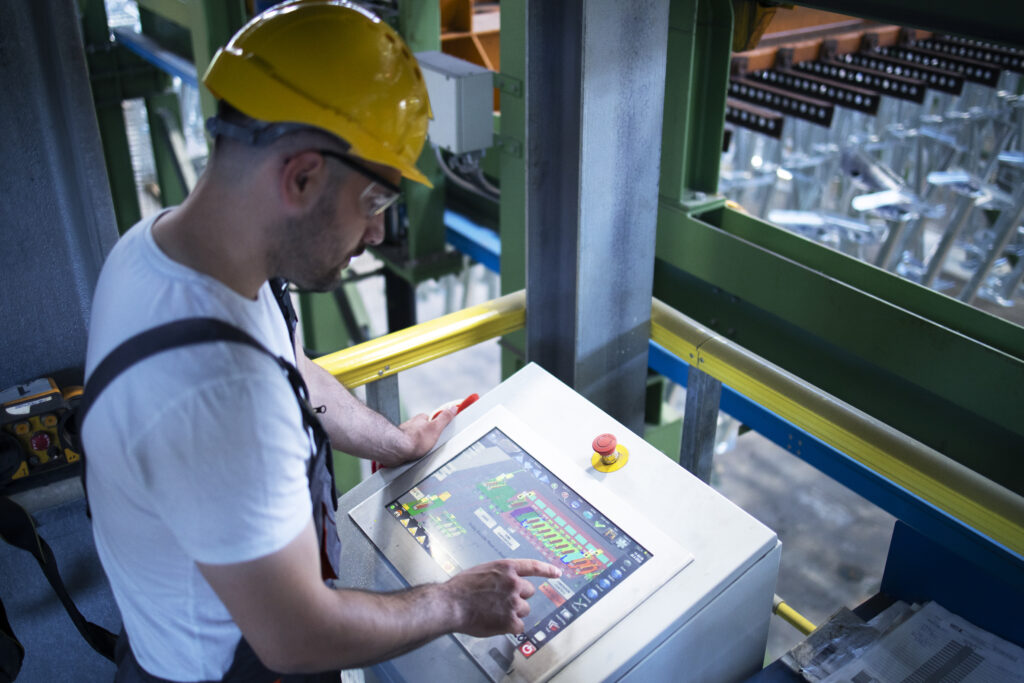
Automation control systems are the central nervous system of modern industry, designed to manage and regulate processes, machines, and equipment with minimal human intervention. By integrating advanced hardware and software components, these systems can monitor process variables, execute control algorithms, and respond to changes in real time. From manufacturing plants and energy facilities to smart buildings and transportation networks, automation control systems ensure operations are efficient, reliable, and safe. Definition and Purpose An automation control system is an interconnected network of devices and software that automatically control industrial or commercial processes. These systems aim to reduce human error, increase productivity, ensure product quality, and maintain safety standards. They operate by gathering data from sensors, processing it using control logic, and issuing commands to actuators to adjust process conditions as needed. Historical Evolution Automation control systems have evolved significantly over the past century. Early systems relied on mechanical and pneumatic controls, which were later replaced by electronic relay logic. The advent of PLCs (Programmable Logic Controllers) in the 1970s revolutionized automation by introducing programmable, reusable, and reliable control devices. Today, modern systems integrate advanced digital control, industrial networking, and cloud connectivity, supporting Industry 4.0 initiatives and smart manufacturing. Core Components Sensors and Transducers: Measure process variables such as temperature, pressure, flow, and position, converting physical signals into electrical data. Controllers: Devices like PLCs, PACs, and DCS units that execute control logic based on input data. Actuators: Components such as motors, valves, and solenoids that perform physical actions in response to controller commands. Human-Machine Interface (HMI): Operator interfaces for monitoring, diagnostics, and manual adjustments. Communication Networks: Protocols and hardware enabling data exchange, including Industrial Ethernet, Modbus, and Profibus. Types of Automation Control Systems Open-Loop Systems: Operate without feedback, suitable for simple, predictable processes. Closed-Loop Systems: Use feedback to adjust operations continuously, ensuring stability and accuracy. Distributed Control Systems (DCS): Manage large, complex processes by distributing control across multiple controllers. SCADA Systems: Provide centralized supervisory control and data acquisition for geographically dispersed assets. Applications Across Industries Manufacturing: Assembly line automation, robotic welding, CNC machine control, and quality inspection. Energy: Power plant control, renewable energy integration, and grid load management. Water & Wastewater: Pump station control, filtration monitoring, and distribution network management. Transportation: Traffic signal control, railway signaling, and airport baggage handling systems. Building Automation: HVAC, lighting, security, and fire suppression systems. Benefits of Automation Control Systems Improved productivity and throughput. Consistent product quality and reduced defects. Lower operational costs through energy optimization and labor savings. Enhanced safety with automated hazard detection and mitigation. Real-time data visibility for informed decision-making. Security and Reliability Automation control systems must be designed for high availability and robust security. Cybersecurity measures such as network segmentation, encryption, and role-based access control are critical to protect against threats. Functional safety standards like IEC 61508 ensure systems operate reliably, even under fault conditions. Integration Challenges Integrating new automation systems into existing infrastructure can be challenging due to legacy equipment, protocol incompatibilities, and varying operational requirements. Solutions include using protocol converters, adopting standardized communication protocols, and performing thorough system audits before deployment. Industry Standards and Compliance IEC 61131-3: Standard for PLC programming languages. ISA/IEC 62443: Industrial cybersecurity framework. ISO 50001: Energy management systems. NFPA 70E: Electrical safety standards. Industry 4.0 and Future Trends Industrial IoT Integration: Connecting assets for real-time monitoring and predictive analytics. AI and Machine Learning: Optimizing control strategies and predictive maintenance. Edge Computing: Processing data locally to reduce latency and enhance responsiveness. Digital Twins: Creating virtual models for simulation, training, and optimization. Automation control systems are indispensable to modern industry, providing the intelligence, precision, and adaptability required to compete in a rapidly evolving global market. By combining advanced sensors, robust controllers, intelligent software, and secure communication networks, these systems deliver the performance and reliability needed to meet the challenges of today and tomorrow.
Defense Electronics Software
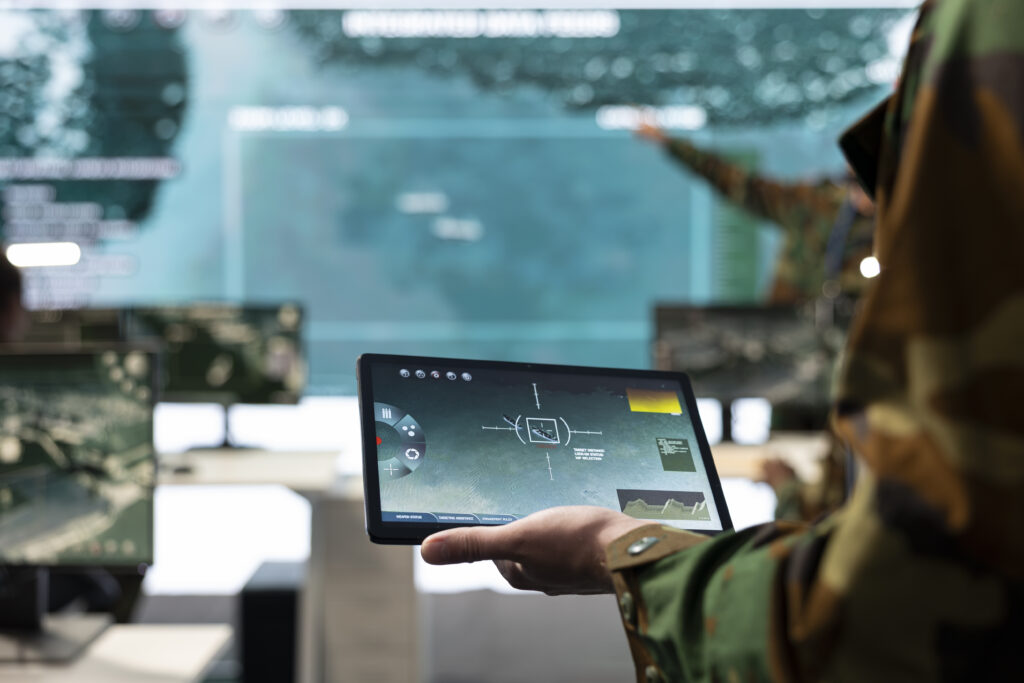
Defense electronics software is at the core of modern military technology, serving as the intelligent layer that governs, coordinates, and optimizes advanced defense systems. These software platforms control and manage everything from radar and sonar systems to electronic warfare modules, communication networks, missile guidance units, and unmanned vehicles. In high-stakes operational environments, where milliseconds can determine mission success or failure, the design and implementation of such software must achieve near-perfect reliability, security, and responsiveness. This makes defense electronics software one of the most sophisticated categories in the entire defense industry. Fundamentals of Defense Electronics Software Defense electronics software connects mission objectives with the underlying electronics, ensuring that sensors, processors, and actuators work together in real time. It translates tactical requirements into precise electronic actions—whether that means tuning a radar beam, initiating countermeasures, encrypting communications, or adjusting navigation for a missile in flight. The complexity of these environments demands software that can perform under extreme temperatures, electromagnetic interference, and constant cyber threats. Key Components and Architecture Embedded Control Systems: These are specialized firmware and software packages operating directly on avionics, weapon controllers, and ground station electronics. Signal Processing Modules: High-performance algorithms that filter, analyze, and interpret signals from radar, sonar, and electronic intelligence equipment. Communication Middleware: Secure data exchange layers that integrate with military-grade communication protocols such as Link 16, SATCOM, and proprietary tactical networks. Operator Interfaces: Highly customized, secure HMIs (Human-Machine Interfaces) that provide actionable data and control without overwhelming the operator. Cybersecurity Frameworks: Intrusion detection, secure boot processes, and encryption systems that safeguard both data and command integrity. Core Functionalities While different projects have unique requirements, most defense electronics software delivers several universal capabilities: Real-Time Processing: Millisecond-level data handling for target acquisition, threat detection, and automated decision support. Adaptive Control: Adjusting system parameters in real time based on environmental conditions or mission changes. Multi-Sensor Fusion: Combining data from multiple sources—radar, infrared, optical, and acoustic—to create a unified operational picture. Redundancy Management: Ensuring continued operation by automatically switching to backup systems during failures. Secure Remote Updates: Delivering software patches and upgrades without compromising system security. Applications Across Defense Systems Radar Systems: Control beam steering, pulse modulation, and target tracking algorithms. Electronic Warfare Platforms: Operate jamming, deception, and anti-jamming techniques to disrupt enemy systems. Missile and Munition Guidance: Integrate GPS, inertial navigation, and real-time trajectory adjustments. Unmanned Systems: Autonomous control for UAVs, UGVs, and USVs with AI-based decision-making and obstacle avoidance. Naval Combat Systems: Manage sonar arrays, fire control systems, and shipboard communications. Ground Command Systems: Deliver situational awareness, battle management tools, and encrypted command dissemination. Security Requirements Given the sensitivity of defense operations, software security is paramount. This includes: Multi-Layer Encryption: Protecting data at rest and in transit using NSA-approved algorithms. Secure Boot & Firmware Integrity: Ensuring only authenticated software can run on defense hardware. Access Control: Role-based permissions and multifactor authentication for all operators and maintenance crews. Resilience to Cyber Threats: Continuous monitoring and anomaly detection to respond to cyber intrusions in real time. Standards and Compliance Defense electronics software must meet stringent national and international standards, including: DO-178C: Software safety certification for airborne systems. MIL-STD-1553 / MIL-STD-1760: Military communication and integration protocols. STANAG (NATO Standards): Ensuring interoperability between allied forces. ISO/IEC 15408: Common Criteria for Information Technology Security Evaluation. Integration Challenges Integrating new defense electronics software into existing platforms often presents difficulties such as: Compatibility with legacy systems that may have limited processing power. Ensuring real-time interoperability across different branches of the armed forces. Balancing the addition of new features with stringent certification timelines. Mitigating electromagnetic interference in complex battlefield environments. Emerging Trends Artificial Intelligence: Predictive threat analysis, autonomous mission planning, and adaptive control strategies. Edge Computing: Processing critical data locally to reduce latency and dependency on central command. Quantum-Resistant Encryption: Preparing for the post-quantum security landscape. Digital Twin Simulation: Virtual replicas of defense systems for training, maintenance, and optimization. Defense electronics software represents the fusion of advanced engineering, military strategy, and cutting-edge computing. Its role extends far beyond simple system control—it is the central nervous system of modern defense capabilities, ensuring that hardware performs to its maximum potential under the harshest conditions. As defense operations become more complex and technologically integrated, the demand for secure, intelligent, and adaptable software will only intensify, shaping the future of military effectiveness and national security.
SCADA Software for Industry

SCADA software for industry is one of the most vital elements in the modern industrial automation landscape. It serves as the brain of countless manufacturing plants, power stations, water treatment facilities, and transportation systems. By integrating hardware devices such as PLCs (Programmable Logic Controllers), RTUs (Remote Terminal Units), industrial sensors, and actuators with centralized software platforms, SCADA provides unparalleled visibility and control over operational processes. Its main objectives are to maximize productivity, ensure safety, maintain product quality, and support data-driven decision-making across all levels of an organization. What SCADA Software Does At its core, SCADA—short for Supervisory Control and Data Acquisition—performs three main tasks: gathering data from the field, processing and visualizing that data for human operators, and enabling control commands to be issued back to the system. These functions allow industries to run more efficiently, reduce downtime, respond quickly to emergencies, and forecast future maintenance needs based on real-time and historical trends. Core Components of SCADA Systems To understand the full capabilities of SCADA, it’s essential to break down its main components: Field Devices: These include sensors, actuators, flow meters, and other instruments that collect process data and execute commands. RTUs and PLCs: These devices act as intermediaries between the field and the central system, processing signals and executing control logic. Communications Infrastructure: SCADA uses industrial protocols such as Modbus, DNP3, OPC UA, and IEC 61850 to transmit data securely. SCADA Servers: Centralized systems where data is processed, stored, and made available for visualization and analysis. HMI (Human-Machine Interface): The visual layer where operators monitor processes, respond to alarms, and adjust settings. Key Features of SCADA Software for Industry Real-Time Monitoring: Continuous tracking of variables like temperature, pressure, flow rate, and equipment status. Advanced Alarming: Configurable alerts for abnormal conditions, categorized by priority to ensure timely response. Data Historian: Long-term storage and retrieval of data for compliance, audits, and process optimization. Remote Accessibility: Secure web or mobile access for off-site monitoring and control. Customizable Dashboards: User-specific views tailored to roles such as maintenance, operations, or management. Benefits of Implementing SCADA SCADA delivers substantial benefits across industries. The immediate impact is improved operational visibility—operators can see exactly what’s happening across an entire plant or network in real time. This level of insight enables: Reduced Downtime: Through predictive maintenance and quick fault detection. Increased Efficiency: Optimized process flows and reduced waste. Enhanced Safety: Immediate detection and automated response to hazardous conditions. Better Decision-Making: Data-driven insights for strategic planning. Regulatory Compliance: Detailed records for environmental, safety, and quality audits. SCADA Security Considerations Security in SCADA is critical because these systems often control essential infrastructure. Threats range from cyber attacks to physical tampering. To safeguard SCADA systems, industries adopt: Encrypted communications to prevent data interception. Multi-factor authentication and strict user permissions. Firewalls and network segmentation between IT and OT networks. Regular vulnerability assessments and patch updates. Compliance with cybersecurity standards such as IEC 62443 and NIST. Integration with Industrial Ecosystems Modern SCADA software does not operate in isolation—it integrates seamlessly with MES (Manufacturing Execution Systems), ERP (Enterprise Resource Planning), and IIoT (Industrial Internet of Things) platforms. This integration enables the automatic sharing of production data, inventory levels, energy consumption metrics, and quality reports across departments, ensuring a unified operational strategy. Industry Applications SCADA is used across numerous sectors, each with its own priorities: Manufacturing: Monitoring production lines, ensuring quality control, and coordinating robotic systems. Energy: Managing power grids, renewable energy sources, and load balancing. Water & Wastewater: Controlling pumps, reservoirs, and treatment processes. Oil & Gas: Supervising pipelines, refining operations, and offshore platforms. Transportation: Monitoring rail systems, traffic lights, and airport facilities. SCADA in the Era of Industry 4.0 As industries adopt digital transformation, SCADA is evolving to support big data analytics, cloud integration, and artificial intelligence. AI-driven SCADA platforms can analyze patterns, predict failures, and even autonomously adjust process parameters. Additionally, mobile SCADA apps and cloud-based deployments provide flexibility for geographically dispersed operations. Challenges in SCADA Deployment While SCADA offers numerous benefits, implementation is not without challenges. These can include high initial costs, complex integration with legacy systems, the need for specialized training, and ensuring robust cybersecurity. Careful planning, phased rollouts, and partnering with experienced system integrators can mitigate these issues. Future Trends Integration with digital twins for advanced simulation and testing. Wider adoption of edge computing for faster local processing. Greater use of AI for adaptive control and predictive analytics. Expanded interoperability through open communication standards. SCADA software for industry is far more than a monitoring tool—it is a strategic technology that underpins the efficiency, safety, and competitiveness of modern industrial operations. By providing real-time insights, facilitating control, and integrating with broader enterprise systems, SCADA empowers industries to operate at peak performance while preparing for the demands of the future.